8 hr
La Rioja Wine Tour from San Sebastian, Bilbao or Vitoria
Discover award-winning Rioja wines with winery visits, tastings, and a traditional lunch in medieval Laguardia
Reserve
Hand-picked by our editors — only the best 5 tours from 23 reviewed.
Verified partners for every tour, free cancellation where available, and instant confirmation on every booking.
8 hr
Discover award-winning Rioja wines with winery visits, tastings, and a traditional lunch in medieval Laguardia
Reserve
9 hr
Explore two distinct wineries in Spain's premier wine country with tastings and medieval village walks
Reserve
9 hr
Full-day wine experience exploring family wineries, tasting premium Rioja vintages, and savoring a traditional four-course meal
ReservePrices from verified partners. Availability updates in real time at checkout. Free cancellation policies apply where shown.
The landmarks, rooms, and views travelers on this tour remember — all visible on a single visit.
Walk through historic underground tunnels where Rioja wines age in oak barrels.
A rioja wine tour from san sebastian is ideal for those seeking proximity and robust Tempranillo, while a Bordeaux excursion offers a more extensive journey into world-renowned viticulture. Most travelers prefer the logistical efficiency of the Spanish route for shorter trips.
| Feature | Top pick La Rioja | Bordeaux Region |
|---|---|---|
Travel time from San Sebastian |
1.5–2 hours | 4–5 hours |
Landscape |
Rolling hills and mountains | Flatter plains and rivers |
Primary grape varieties |
Tempranillo and Garnacha | Merlot and Cabernet Sauvignon |
Culinary focus |
Tapas and grilled meats | French gastronomy and cheeses |
Crowd density |
Moderate in harvest | High year-round |
| See tickets → |
Verdict: Select the rioja wine tour from san sebastian tours if you prioritize convenience and bold red wines, whereas the Bordeaux trip is superior for deep exploration of historic estates if you secure rioja wine tour from san sebastian tickets or similar logistical arrangements in advance.
Choose your ticket, select your date, and reserve in under two minutes. Secure checkout handled by our verified partner.
Instant confirmation by email, with a mobile voucher you can save offline. No printing, no queuing at a collection desk.
Arrive at the entrance, show your voucher on your phone, and walk in. Most tickets include priority or skip-the-line access.
Practical details for your visit straight from our verified partners — hours, access, rules, and how to get there.
San Sebastian, Spain
Central pick-up points vary by provider
The most direct way to travel for a rioja wine tour from san sebastian is via the AP-8 and A-12 highways.
Casual and comfortable attire is recommended for a rioja wine tour from san sebastian. Wear sturdy walking shoes as cellar tours often involve navigating stone or concrete floors.
Small personal bags are generally permitted during your rioja wine tour from san sebastian. Larger luggage should be left in your transport vehicle to ensure easy movement through vineyard paths.
Photography is usually welcome in the outdoor vineyard areas. Ask your guide before taking photos inside private wine cellars or production facilities.
Vineyard terrain can be uneven and not all historic cellars provide full wheelchair access. Notify your operator in advance if you require specific accommodations during your rioja wine tour from san sebastian.
Mobile phones are permitted for capturing memories of your tour. Please silence devices during guided explanations to respect other guests.
While adult-focused, many wineries welcome families. Check if your chosen rioja wine tour from san sebastian includes kid-friendly non-alcoholic options.
Most tours include tasting sessions as part of the itinerary. Water is provided, but it is wise to carry your own if you have specific dietary needs.
Pets are generally not allowed inside winery production areas or tasting rooms. Service animals may be permitted with prior arrangement.
Keep your departure time in mind to avoid missing your transport. Traffic between San Sebastian and La Rioja can vary, so allow extra time.
Best time to go, insider tips, nearby landmarks, and the cancellation fine print — flip through to skim what matters to you.
How crowds, weather, and events shift across the year.
Mild temperatures and budding vines make this ideal for outdoor tours.
Small details that turn a good visit into a great one.
Reserve your rioja wine tour from san sebastian weeks in advance during harvest season.
Non-bookable sights within a short walk — free to visit, easy to pair.
Famous street in Logroño known for concentrated tapas bars.
Flexible, no hidden fees.
Full refunds are typically available for any rioja wine tour from san sebastian if cancelled within the operator's specified timeframe. Please verify specific tour terms as there is no regional entrance fee of 0 EUR for visiting La Rioja.
Hand-picked options within walking distance — pick a district for vibe, or a specific hotel for convenience.
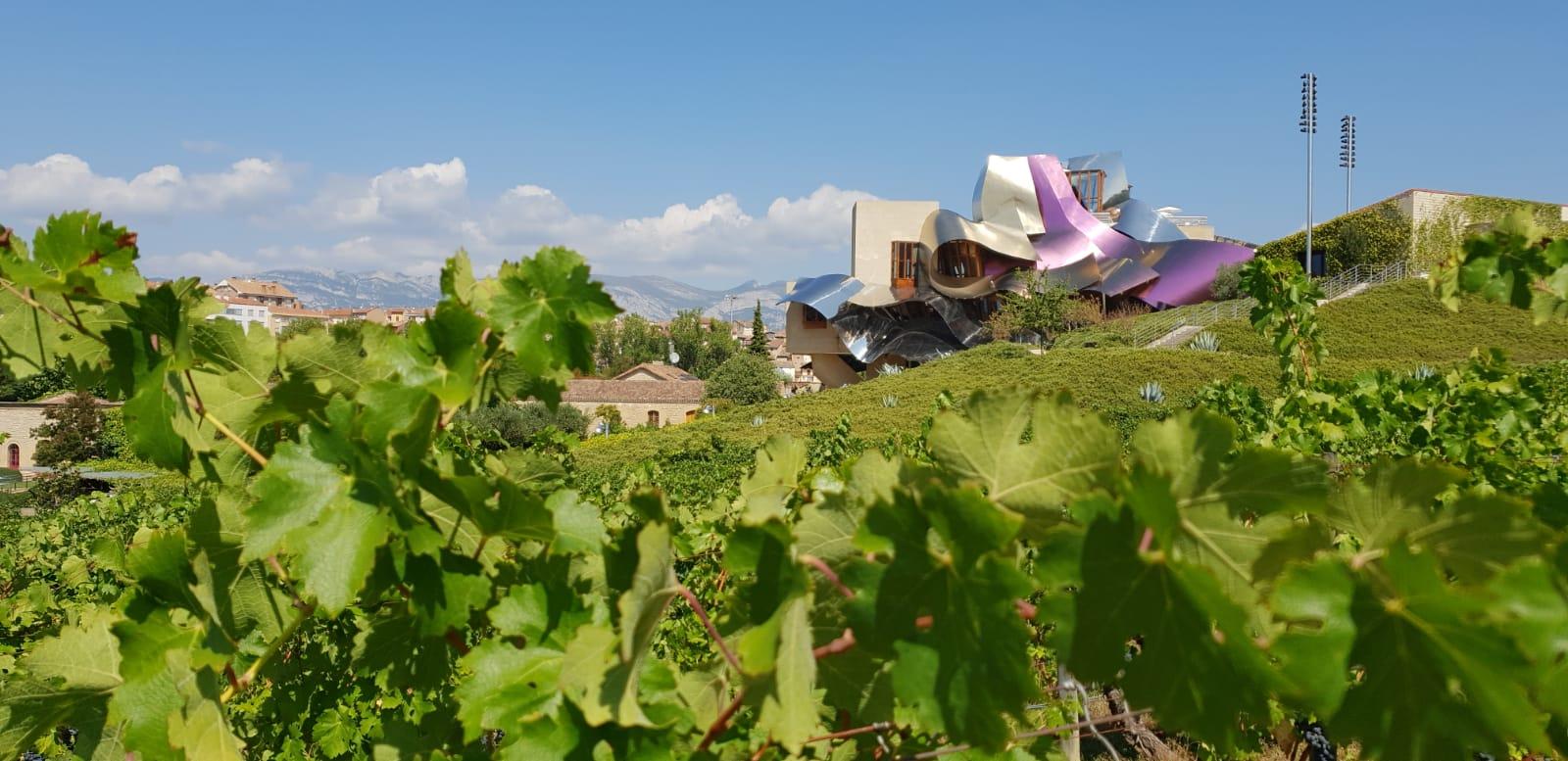
Architectural landmark by Frank Gehry in Elciego.
The Ebro River carved a valley so hospitable to Tempranillo that by 1102 Navarrese monks were pressing wine under royal charter in what is now the Rioja Alta subzone. Today La Rioja produces 280 million litres annually across 64,000 hectares, anchored by the DOCa Rioja designation—Spain's first Denominación de Origen Calificada, awarded in 1991. The region's reputation rests on Tempranillo's ability to express terroir: the clay-limestone soils of Rioja Alta yield structured reds that age for decades in American oak, while the warmer Rioja Baja produces riper, fruit-forward wines. Haro, the capital of Rioja Alta, hosts over 30 bodegas within a ten-minute radius, many occupying 19th-century railway-warehouse buildings whose stone walls maintain cellaring temperatures without mechanical cooling. A Rioja wine tour from San Sebastian bridges two UNESCO-designated food cultures—Basque pintxo tradition and Riojan viticulture—in a single day. The 140-kilometre journey south crosses the Ebro at Logroño, where medieval pilgrimage routes converge and modern tasting rooms occupy Renaissance palaces. Visitors enter barrel halls stacked with 225-litre barricas, the American oak imparting vanilla and coconut notes that define Rioja's crianza and reserva styles. Tours typically include two to three bodegas: a family-run estate where the winemaker walks you through fermentation tanks, and a century-old house whose underground calados extend 200 metres beneath cobbled streets. Tastings follow the crianza-reserva-gran reserva progression, each tier representing additional years in oak and bottle before release. The landscape itself tells viticultural history. Drive past Laguardia, an 11th-century hilltop fortress whose ramparts overlook Rioja Alavesa's chalky slopes, and you see why this subzone specializes in lighter, more aromatic Tempranillo. Vineyards here sit at 450 to 650 metres elevation, high enough that Atlantic weather systems moderate summer heat. Many tours pause in Elciego, where the titanium curves of Marqués de Riscal's Frank Gehry-designed hotel rise above traditional stone bodega buildings—a visual collision of 1858 winemaking heritage and 21st-century wine tourism. Lunch typically pairs regional dishes—pochas con codorniz, chuletillas al sarmiento—with estate wines, each course demonstrating how Rioja's cuisine evolved alongside its viticulture. The route back to San Sebastian follows the N-1, the same road that carried Rioja's first exports north to Bordeaux when phylloxera devastated French vineyards in the 1870s.
"The Ebro River carved a valley so hospitable to Tempranillo that by 1102 Navarrese monks were pressing wine under royal charter."
A step-by-step walkthrough of the visit — what you'll see, how long each stage takes, and the details that matter.
You board the coach in San Sebastian's old quarter at nine, crossing the Urumea and climbing past Monte Igueldo as the city falls away. The highway cuts through Gipuzkoa's green hills, then drops into the Ebro basin where vineyard rows replace oak forests. By ten-thirty you're standing in a bodega courtyard in Haro, looking at stone archways built when railways first linked the region to northern markets. Your guide leads you down into the calado—a limestone tunnel that stays fifteen degrees year-round—where oak barrels form corridors stretching beyond lamplight. You taste a two-year crianza directly from the barrel, the wine still months from bottling. The second stop is a family-run estate outside Logroño. You walk between Tempranillo vines heavy with autumn fruit, then enter the fermentation room where stainless-steel tanks tower overhead. The winemaker explains malolactic conversion while pouring a single-vineyard reserva. Lunch follows in a stone-walled dining room: white asparagus from Navarra, lamb chops grilled over vine cuttings, Idiazábal cheese with quince paste. Each course comes with a different estate bottling. By mid-afternoon you're in Laguardia, standing on medieval ramparts with the Sierra de Cantabria behind you and vine-covered slopes rolling toward the Ebro. The return drive reaches San Sebastian by seven, the Atlantic light slanting across La Concha as you re-enter the city.
Most wineries operate between 09:00–18:00, but always check your specific booking.
Family policies vary, so check if your chosen tour offers activities for children.
Keep luggage light; most operators prefer small personal bags only.
We recommend a 09:00–11:00 arrival window to maximize your day.
You can secure your spot through the tour operator's booking grid.
Historic wineries may have stairs, so verify access with your specific provider.
Yes, photos are usually permitted in vineyards, but ask before photographing cellars.
Lunch is often included or offered as an add-on; verify your tour details.
Most excursions are full-day experiences starting from San Sebastian.
Bring comfortable shoes, sunscreen, and a camera for the scenic views.